
Human Advantage 2026: Rethinking Our Place in an AI-Shaped World
Human Advantage 2026 gathered diverse leaders to discuss the interplay between AI and human potential. The event emphasized nurturing our humanity amidst technological advancements.
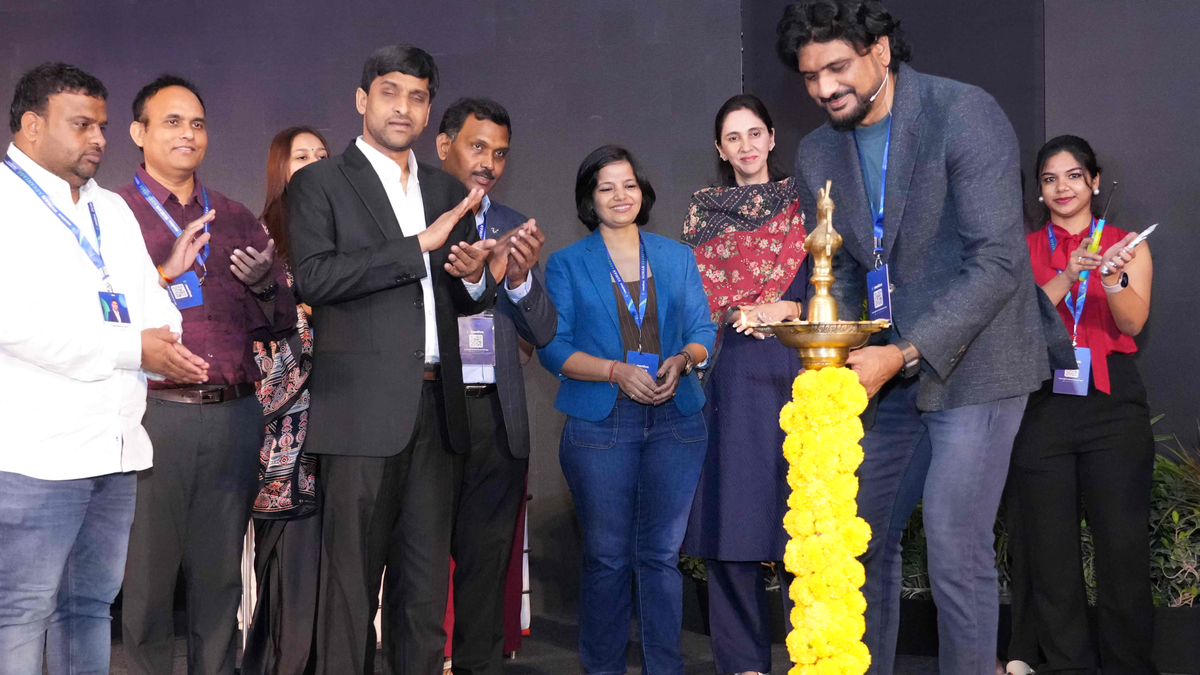
There is no shortage of conversations about what artificial intelligence can do. Machines are writing, analysing, designing, predicting and making decisions at a scale that would have seemed improbable just a few years ago. Organisations are racing to understand what this means for productivity, competitiveness and the future of work.
But amid all the excitement about what technology can become capable of, a more fundamental question deserves equal attention: as machines become more capable, what must we become more capable of as human beings?
This was the question at the heart of Human Advantage 2026, a gathering convened by Menthra on 10 October'26 at Avasa Hotel, HITEC City, Hyderabad.
It brought together people from across industries, including leaders in business, technology, healthcare, education and social impact, to explore what it means to preserve and nurture our humanity in an increasingly AI-driven world.
The premise was simple, but consequential: the future is not merely something we must learn to keep pace with. It is something we must consciously choose to shape.
Table of Contents
- A different question about the future of AI
- Bringing different worlds into one conversation
- From individual potential to the responsibility of leadership
- Why emotional wellbeing belongs in the conversation about progress
- Intelligence, perception and the limits of what we know
- The question beneath innovation: What is progress for?
- Becoming Human: What Makes Us, Us?
- Turning the conversation towards access
- Why Human Advantage was more than a one-day gathering
- The conversation continues
- Media
A different question about the future of AI
The prevailing discourse around AI often centres on capability: what can be automated, what can be accelerated, what can be optimised, and what new possibilities become available when human and machine intelligence work together?
These are important questions. Yet they are incomplete without a parallel examination of human agency, judgement, emotional resilience, creativity and connection.
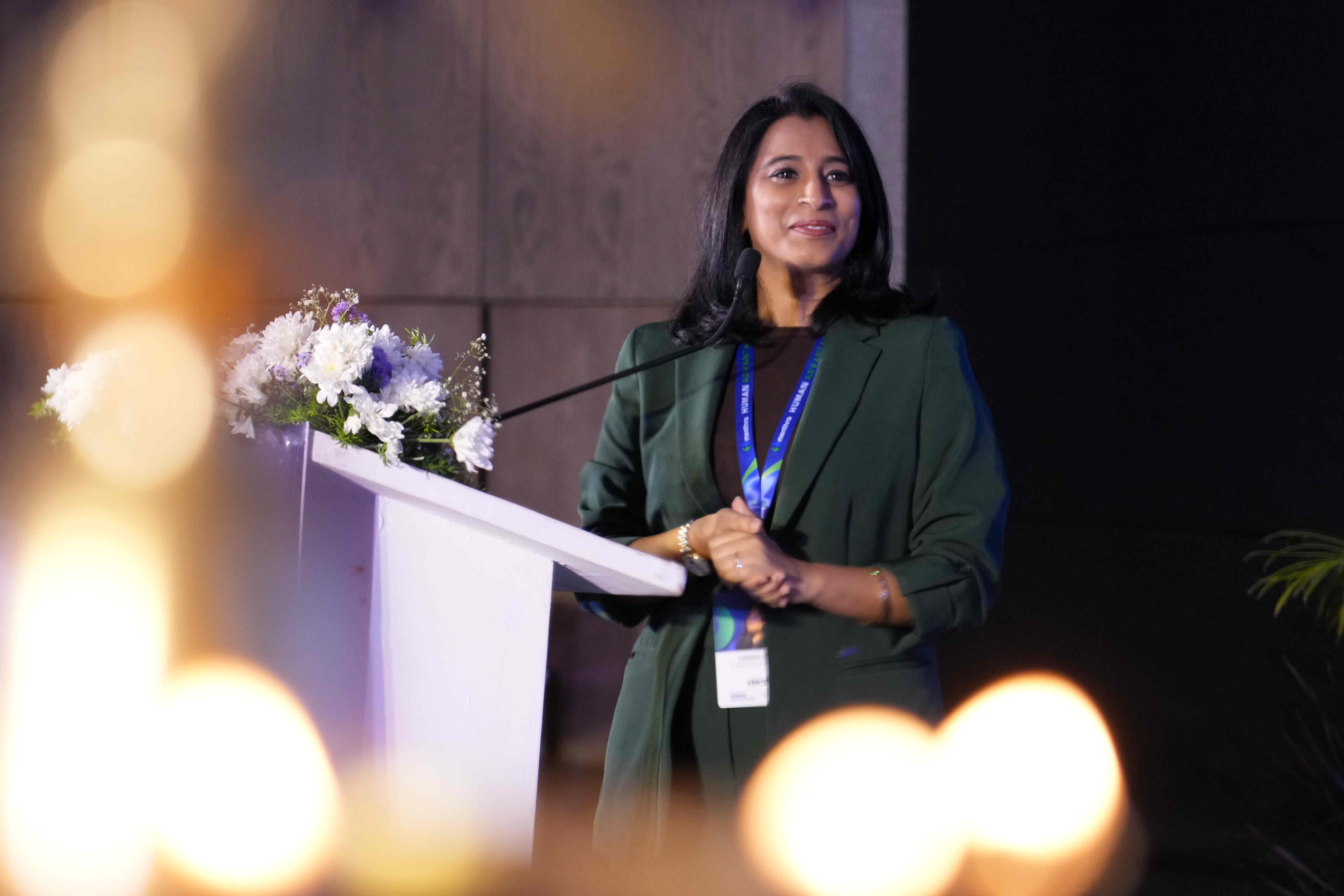
Human Advantage was built around this missing dimension. Rather than positioning technology and humanity as opposing forces, the gathering explored how the two might evolve together, and what individuals and institutions must do to ensure that technological progress translates into meaningful human progress.
That distinction matters.
A more productive organisation is not necessarily a healthier one. Greater access to information does not automatically produce wiser decisions. And the ability to communicate instantly does not guarantee that people feel understood.
The conversations throughout the day approached this question from different directions, moving from individual potential and intelligence to leadership, wellbeing, innovation and the responsibilities that come with progress.
Bringing different worlds into one conversation
One of the defining characteristics of Human Advantage was the range of perspectives it brought into the same room.
The programme featured voices from enterprise technology, global human resources, healthcare, academia, entrepreneurship, the arts and social impact. Each offered a different vantage point on the same underlying question: what becomes more valuable about being human as the world around us changes?
The speakers included:
- Srikanth Bolla, Chairman, Bollant Industries
- Dr. Rajorshi Ganguli, President and Global HR Head, Alkem Laboratories
- Radhakrishna Bollineni, Vice President, AI, IBM
- Prerana Nayak, General Manager (Health, India), Microsoft AI
- Deepti Varma, Vice President, People Experience and Technology (PXT), Amazon Stores
- Prof. Ashok Kumar Pandey, Professor and Dean (Academics), IIT Hyderabad
- Manisha Saboo, Chief Executive, Infosys Foundation
- Dr. Ch. Preeti Reddy, Vice Chairperson, Malla Reddy Vishwavidyapeeth
- Garima Deveshwar-Bahl, Founder, Avasaram Leadership
- Mihir Ahuja, Actor, Singer and Beatboxer
- Sarita Sarkar, Founder, Sarkar’s Kitchen and Madikeri Craft Coffee
- Sathwik Maanthini, Founder, Communitie
- Voleti Karthik, Founder and CEO, Flashoot
- Meraj Faheem, CEO (in-charge), Telangana Innovation Cell, Government of Telangana
- Prashant Jain, Founder, shaant.ai
The programme also featured an experience led by Chirag Jethwaney, illusionist and mentalist, inviting the audience to engage with questions around perception, attention and the workings of the human mind.
The conversations were guided by facilitators bringing their own professional perspectives to the room, including Dr. Anjali Jaisinghani, Chief Medical Officer at Menthra; Arundhati Prasad, Counselling Psychologist and Mental Health Educator; and Prashant Jain, Founder of shaant.ai. Menthra founder Dinakara Nagalla also helped guide the programme and its central inquiry.
The value of such a cross-disciplinary room lies not simply in the stature of its participants, but in the possibility of encountering a perspective that one's own industry might otherwise overlook.
From individual potential to the responsibility of leadership
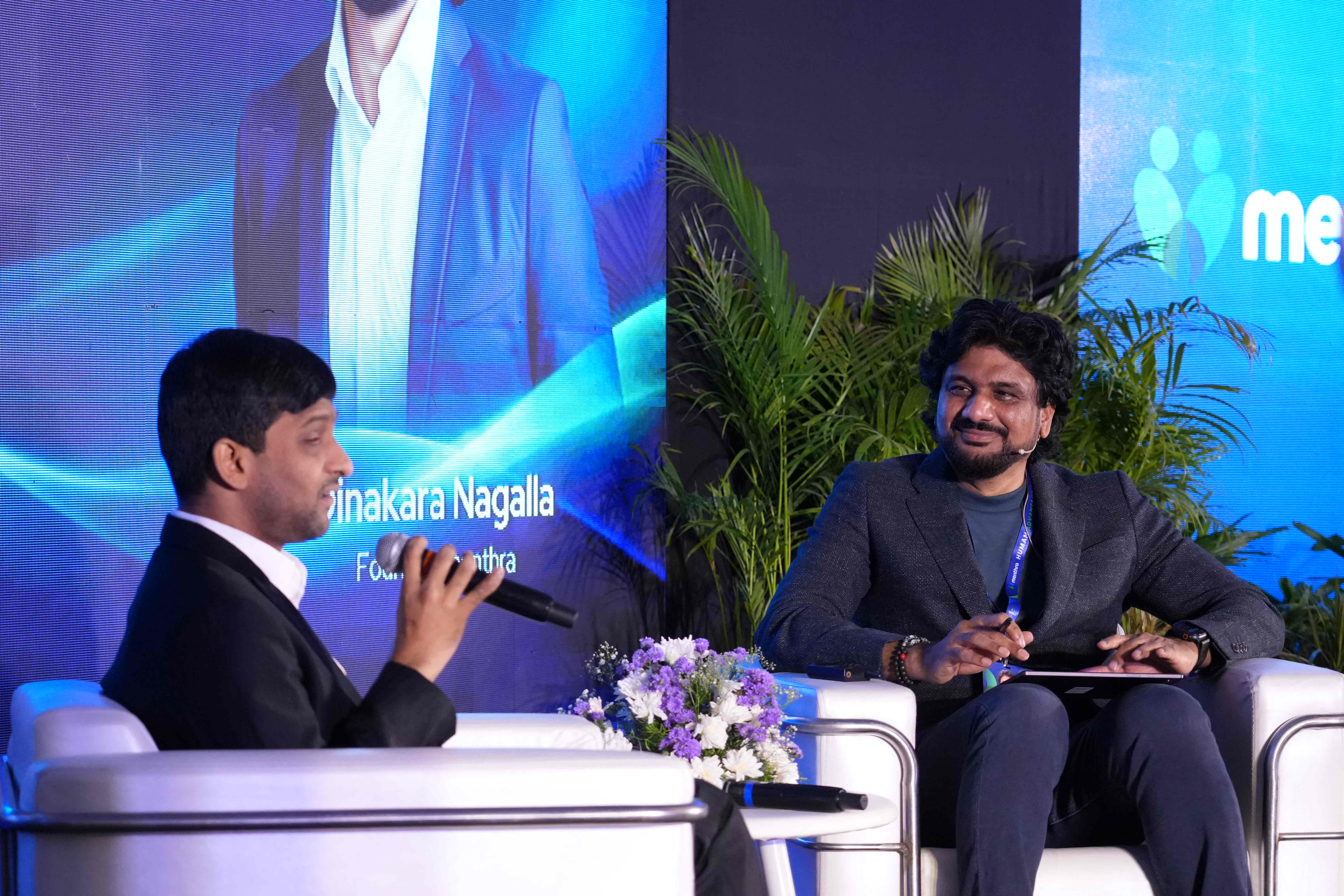
The opening conversation between Srikanth Bolla of Bollant Industries and Dinakara Nagalla brought human potential into focus. It offered a starting point for considering what people can achieve when their abilities are recognised and opportunities are made possible. The discussion placed the emphasis not just on individual capability, but on the conditions that allow that capability to develop.
It was a fitting way to begin a day about the future. Before asking what technology might enable us to do, it is worth asking what we already make possible for one another, and what barriers still prevent people from reaching their potential.
These questions become particularly significant in leadership.
Organisations are not merely systems of processes and performance indicators. They are communities of people whose ability to contribute is shaped by trust, psychological safety, purpose, opportunity and the conditions in which they work.
For leaders, this raises a difficult but necessary distinction: it is one thing to demand resilience from people; it is another to create environments in which resilience can develop.
The conversation around workplaces and wellbeing therefore cannot be reduced to a collection of programmes or benefits. It must also consider how work is designed, how managers respond to people, whether employees feel safe enough to speak honestly, and whether organisational expectations allow people to sustain their contribution over time.
These are not peripheral considerations in the age of AI. As roles evolve and the pace of change intensifies, the quality of the human environment may become even more consequential.
Technology can expand what an organisation is able to do. Leadership determines, in large part, what that organisation asks of its people and what it enables them to become.
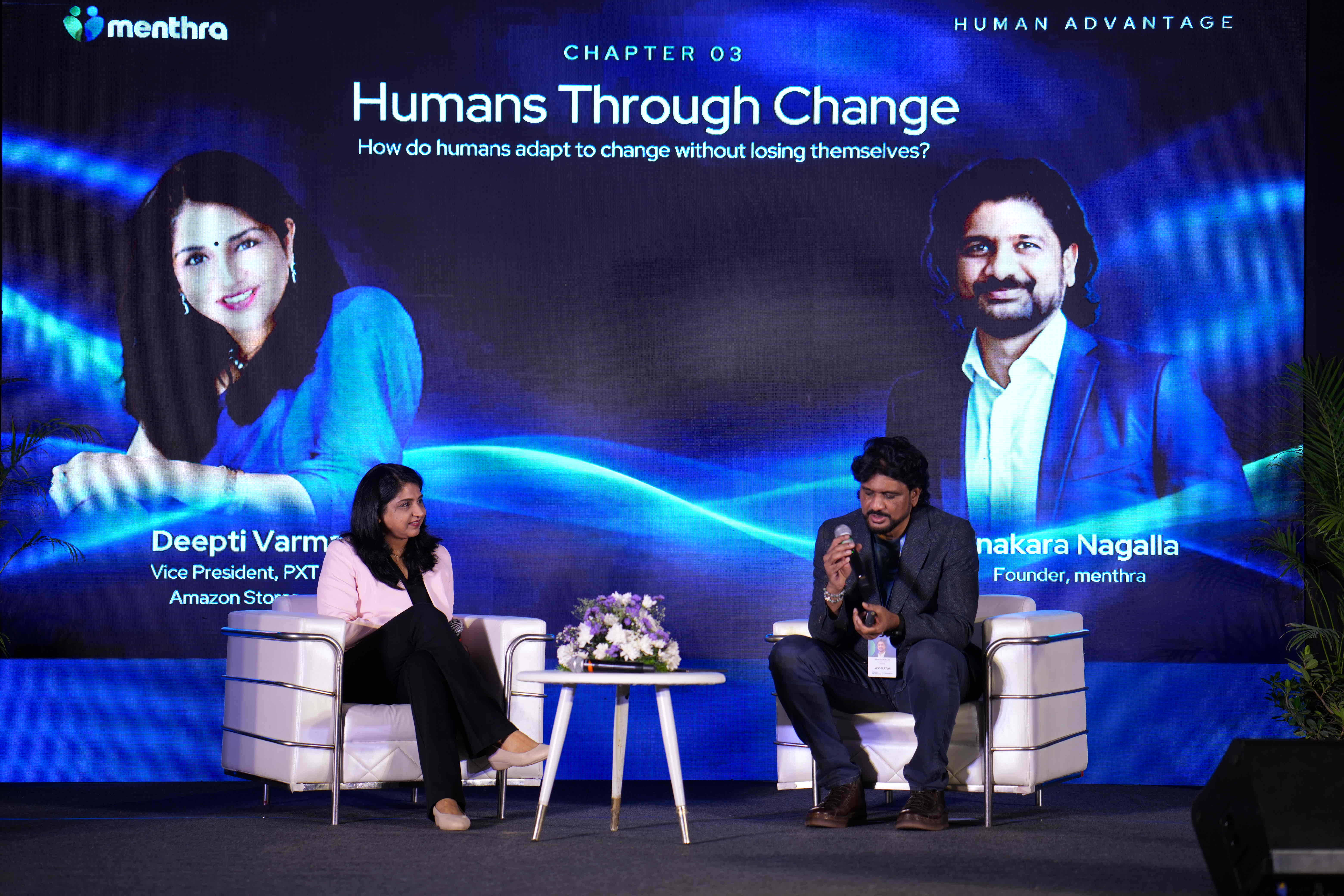
This was explored further in a conversation between Deepti Varma of Amazon and Dinakara Nagalla on leading people through constant change. As organisations adapt to shifting technologies and expectations, leaders are faced with a challenge that goes beyond implementing change: helping people navigate it. The conversation brought attention to the human experience of transformation, and to the importance of considering the people expected to adapt alongside the systems being introduced.
Why emotional wellbeing belongs in the conversation about progress
A discussion about human potential is incomplete if it considers only what people can achieve and ignores what enables them to keep going.
Our ability to think clearly, make sound decisions, collaborate, create and respond to uncertainty is inseparable from our emotional lives. Yet emotional wellbeing is often treated as an individual responsibility, addressed only when difficulties become too visible to ignore.
A more considered approach recognises that wellbeing is connected to the environments in which people live, learn and work.
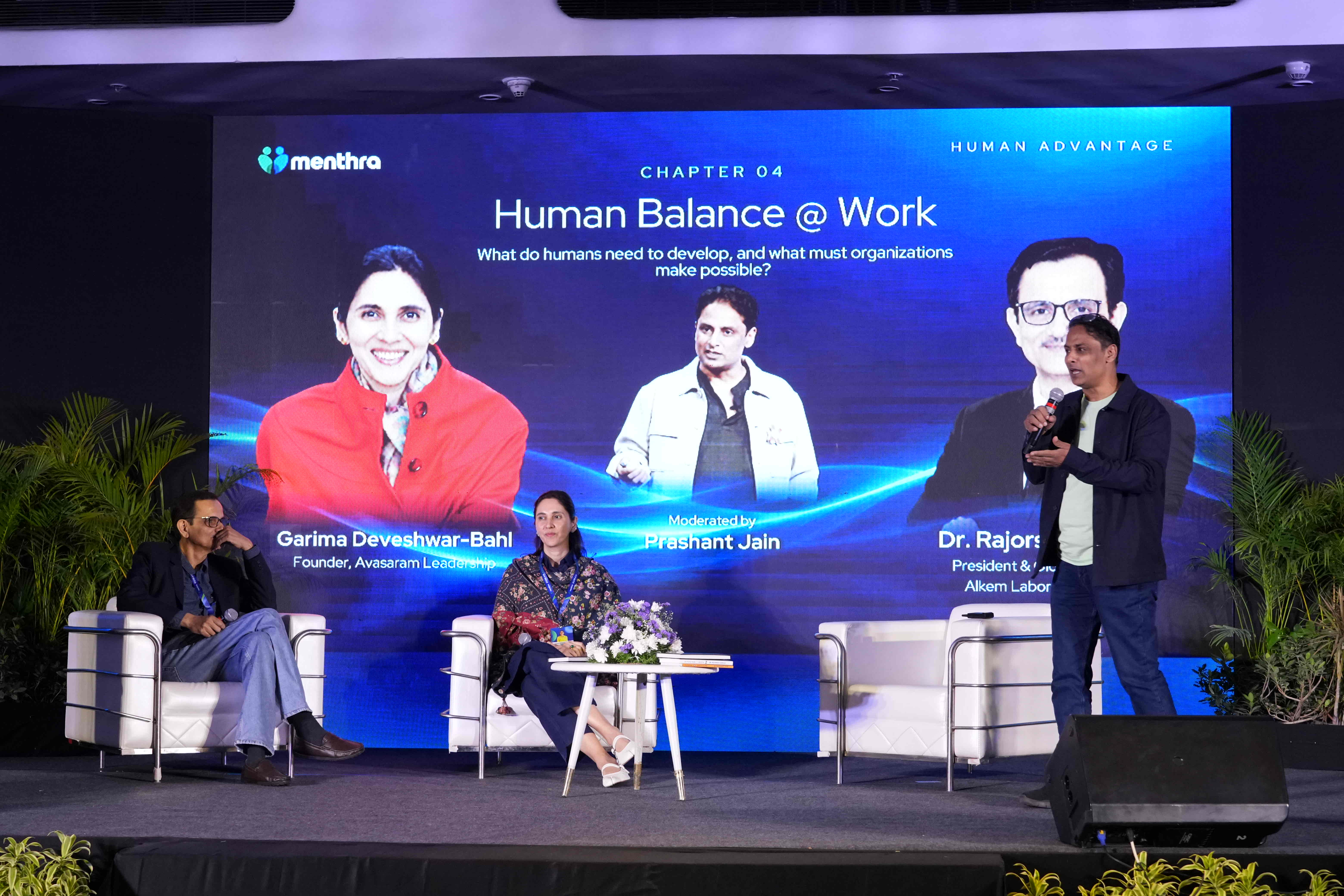
This question came into sharper focus through a conversation between Dr. Rajorshi Ganguli of Alkem Laboratories and Garima Deveshwar-Bahl of Avasaram Leadership, which explored balance at work. The discussion connected the individual experience of work with the wider expectations and structures that shape it.
Balance is often framed as a matter of managing time or finding a better division between professional responsibilities and personal life. But the experience of work is also shaped by expectations, relationships, organisational culture and the degree to which people feel able to meet demands without losing sight of their own needs.
As technology enables faster communication and increasingly efficient workflows, the boundary between being available and being constantly available can become harder to recognise. Greater productivity may create new possibilities, but it can also raise expectations about how much more people should be able to do.
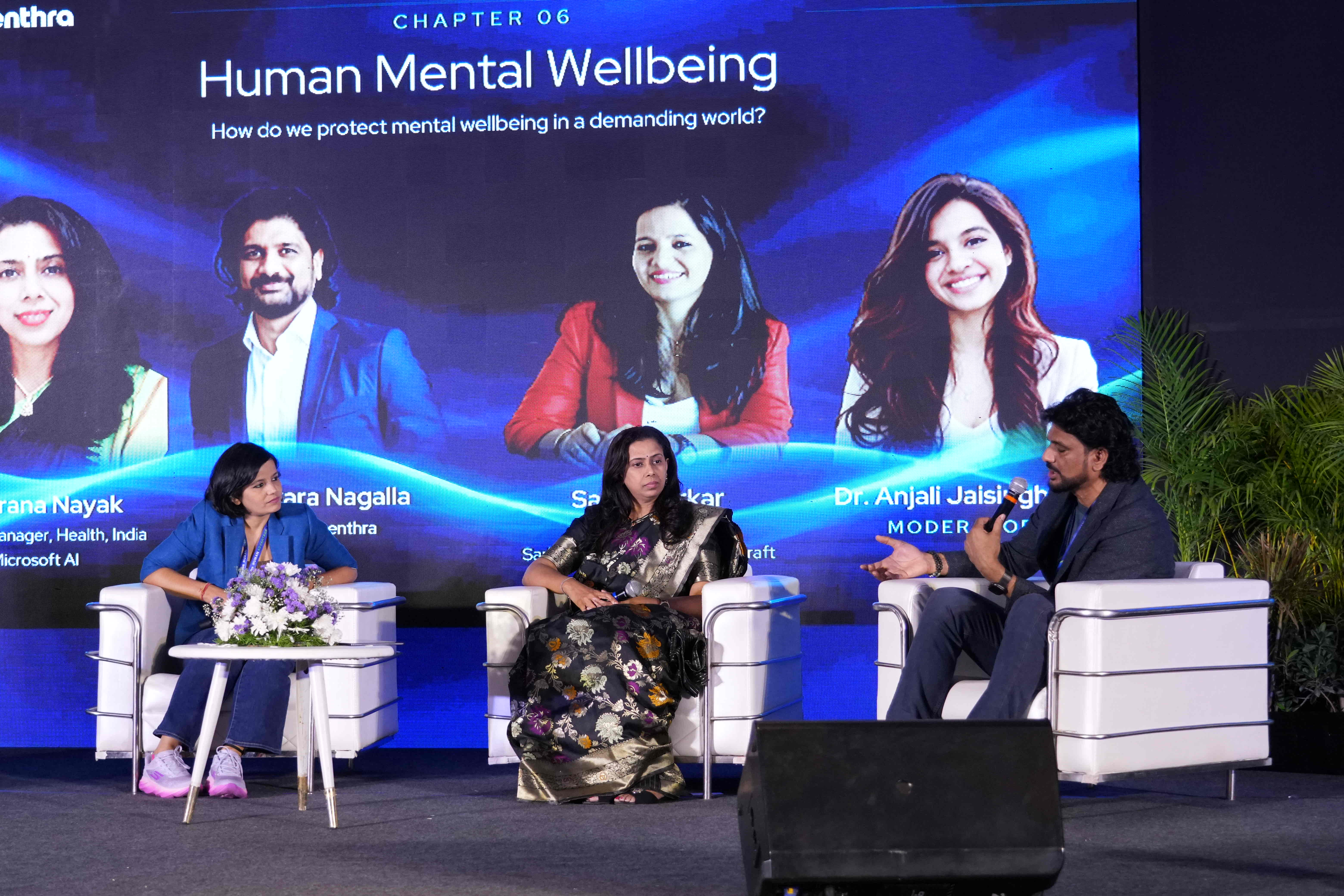
A related conversation between Prerana Nayak of Microsoft and Sarita Sarkar of Sarkar’s Kitchen explored what it means to support a human being well. Their discussion brought the focus from performance and balance to the forms of support people need in order to navigate life. Support can take many forms, from access to relevant resources to the relationships and communities that make it easier to ask for help.
The question becomes particularly important as technology creates new ways to connect people with services and resources. Making support available is one part of the challenge; ensuring that it is relevant, accessible and responsive to human needs is another.
Menthra's work in the emotional wellbeing ecosystem is rooted in this intersection of technology and human need. The platform brings together AI companions, coaches, therapists and other wellbeing resources, with the broader aim of making support more accessible and continuous.
Human Advantage extended that philosophy into a wider public conversation. It was an opportunity to examine the human questions surrounding technological change without reducing the discussion to a product demonstration.
For those ready to take the next step, Menthra offers 15 minutes free with a real therapist, making it easier to explore professional support. Download the menthra app to get started.
Intelligence, perception and the limits of what we know
The conversation about human capability also raised a fundamental question: how do we understand intelligence as machines become increasingly sophisticated?
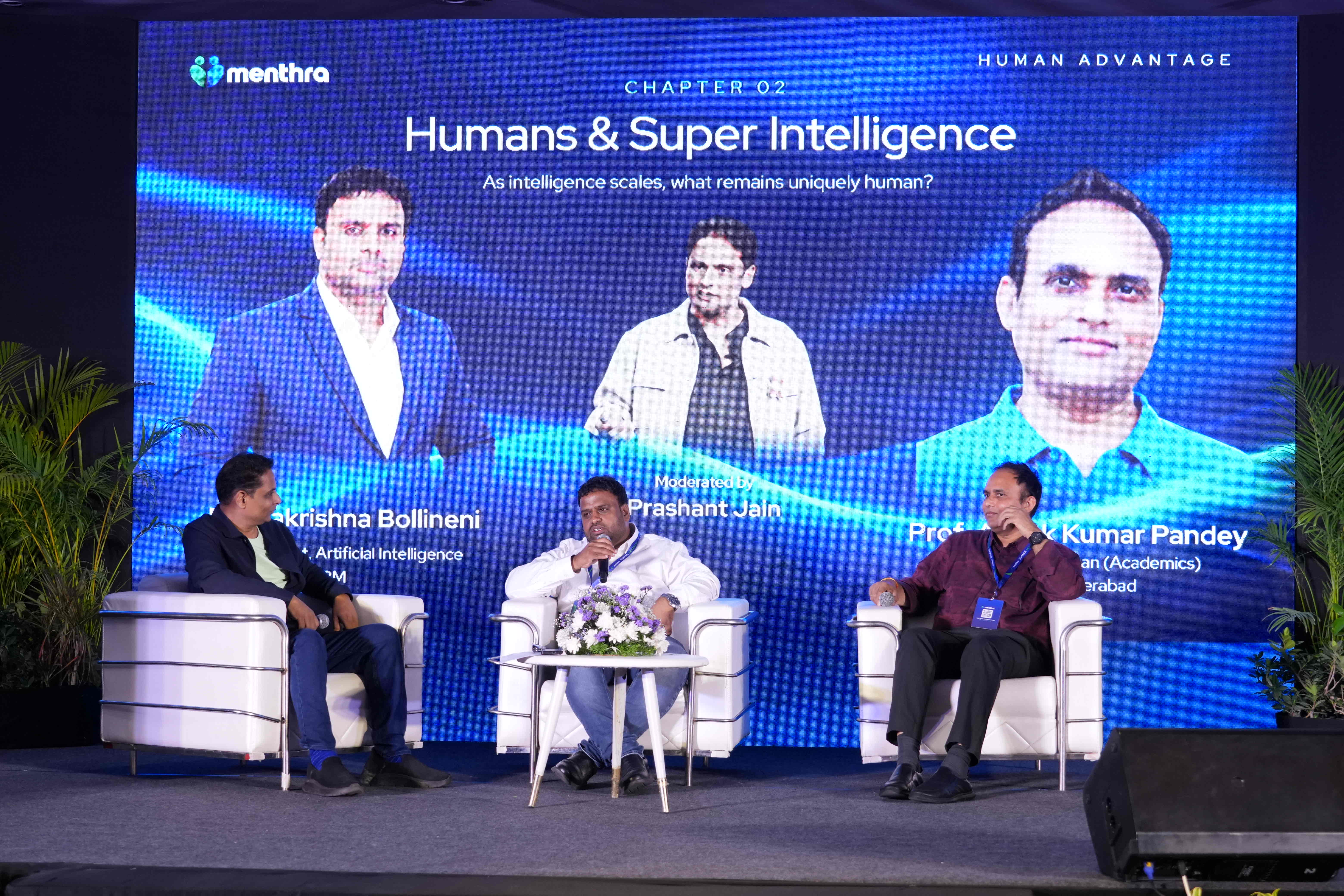
Radhakrishna Bollineni of IBM and Professor Ashok Kumar Pandey of IIT Hyderabad brought perspectives from enterprise AI and academia to a discussion about intelligence itself.
As AI systems become capable of handling increasingly complex tasks, it becomes more important to examine what intelligence means, how it is applied and what role human judgement should play alongside technological capability. The ability to process information and produce an output is not the same as deciding what matters, understanding the wider consequences or taking responsibility for a decision.
These questions are not simply philosophical. They influence how organisations adopt AI, how people evaluate its outputs and how responsibility is assigned when decisions are increasingly supported by automated systems.
The conversation invited the audience to look beyond the race for capability and consider the judgement that must accompany it.
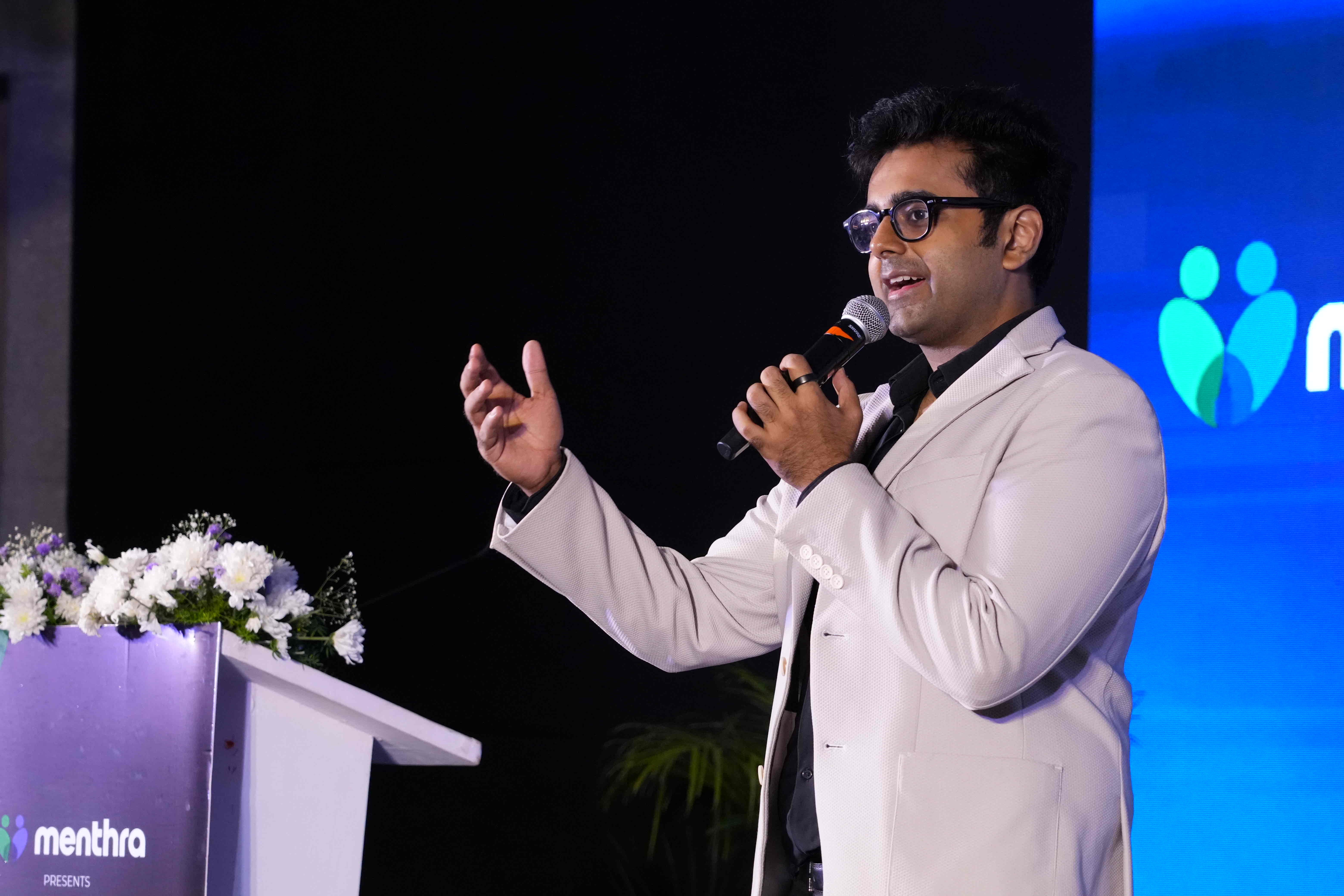
The programme approached the human mind from another direction through Chirag Jethwaney, illusionist and mentalist, whose live experience, Can You Trust Your Own Mind?, invited the audience to question their own perceptions.
The question beneath innovation: What is progress for?
As the programme moved towards its wider questions about the future, the inquiry expanded beyond adaptation and performance to consider the purpose of progress itself.
Technology is often evaluated through the language of scale: more users, greater reach, faster execution and increased capability. These measures can tell us a great deal about what a system achieves. They tell us less about whether the people it touches are better equipped to live, learn, work and participate in society.
This is where the perspectives of social impact, education and healthcare become indispensable to the technology conversation.
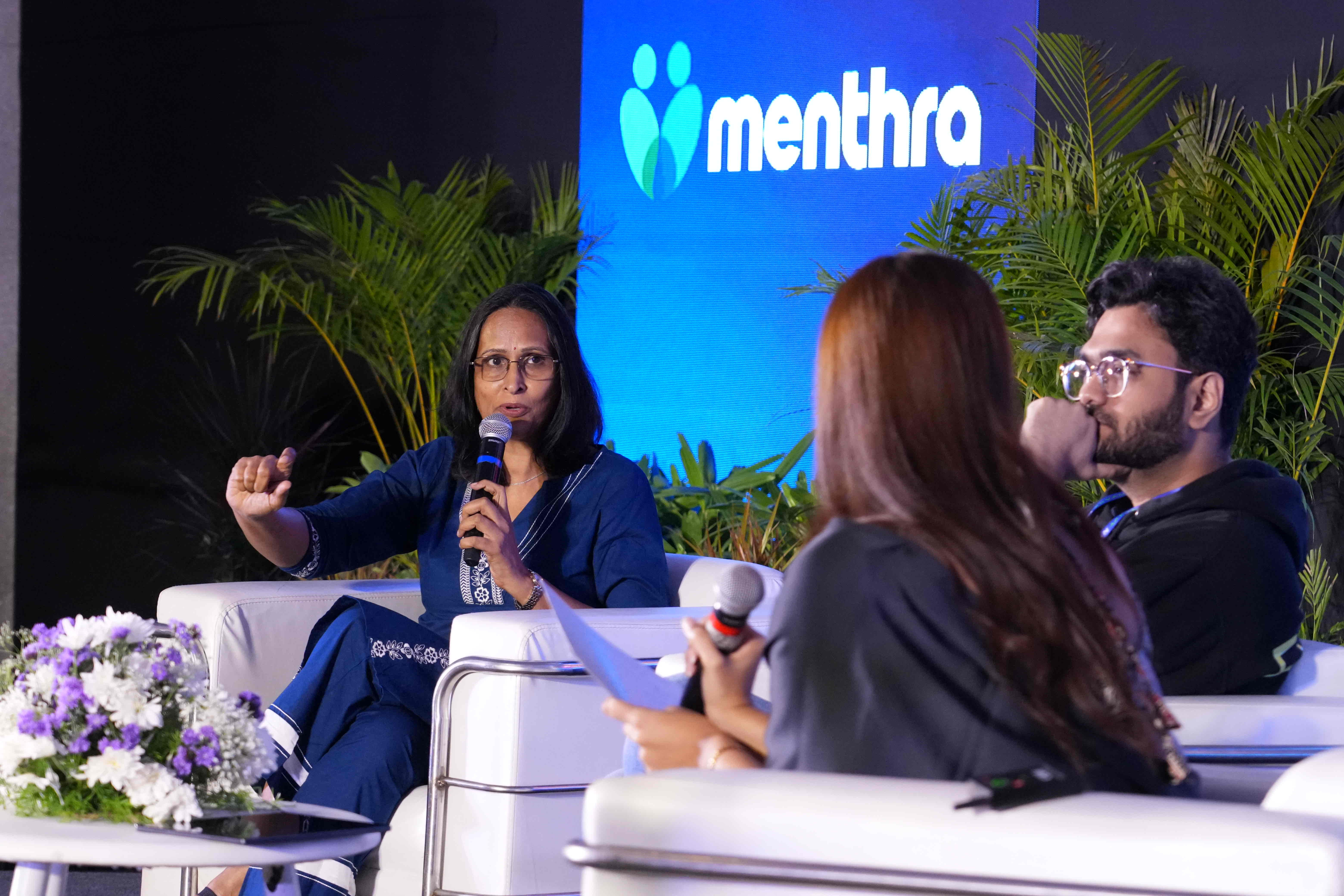
The question was explored through a conversation between Manisha Saboo of Infosys Foundation and Meraj Faheem of Telangana Innovation Cell, Government of Telangana, which brought progress and humanity into the same frame.
If AI expands access to knowledge, how do we ensure that access translates into opportunity? If it increases productivity, how do we ensure that the gains contribute to better lives rather than simply higher expectations? If it enables new forms of support, how do we ensure that people who need that support are not excluded by cost or circumstance?
These questions place human outcomes at the centre of innovation.
They also challenge leaders and builders to think beyond what is technically possible towards what is genuinely worthwhile.
The most important measure of progress may not be how much more we can do, but how much more we make possible for one another.
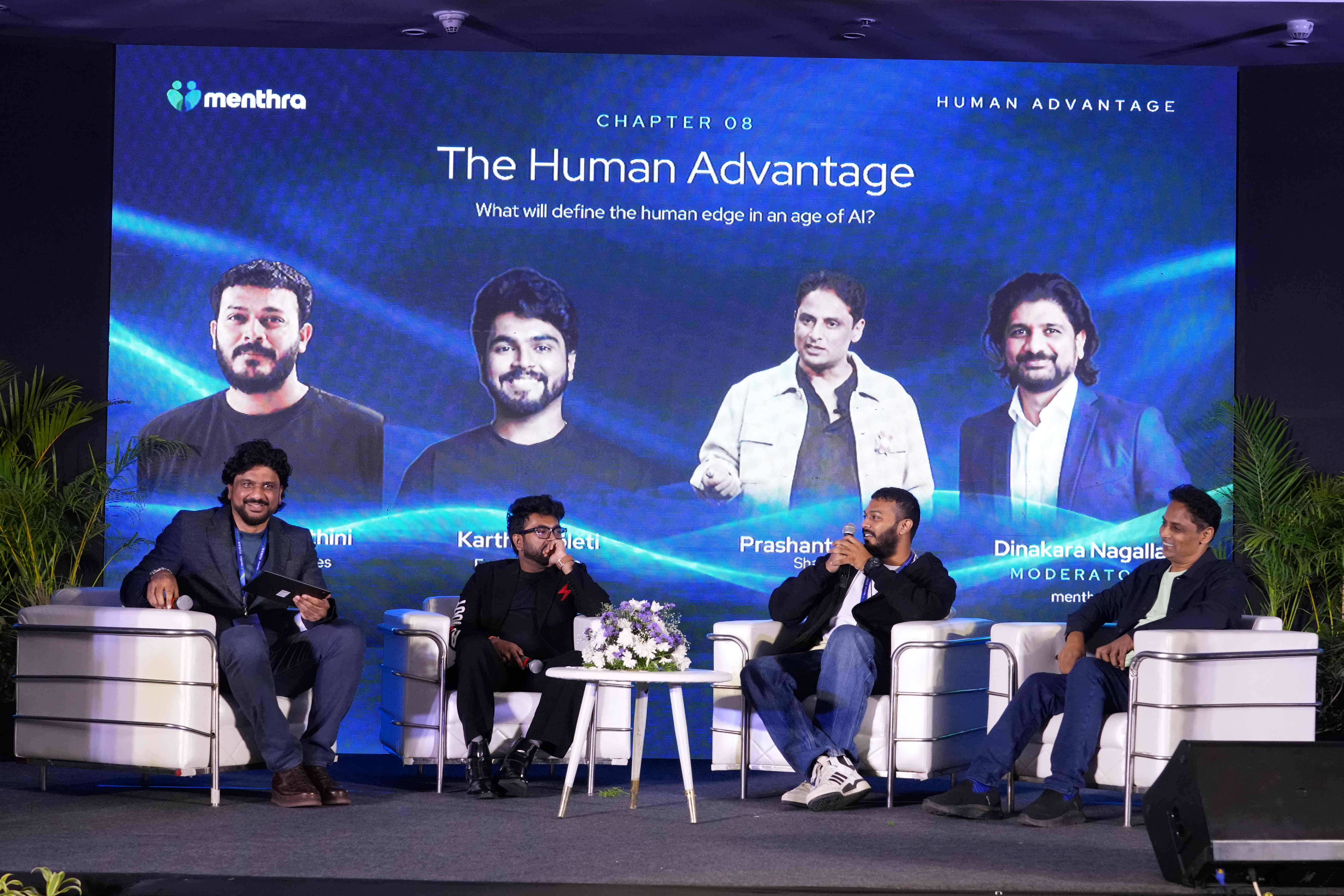
This perspective also informed a conversation about building for human needs, featuring Sathwik Maanthini of Communitie and Voleti Karthik of Flashoot, moderated by Dinakara Nagalla. The discussion examined what they were building and, crucially, who they were building it for.
Innovation often begins with a problem that needs solving. But the way that problem is defined can determine whose needs are considered, whose experiences are understood and who ultimately benefits from the solution.
A product can be technically impressive and still fail to address the reality of the people it is meant to serve. Building well therefore requires more than identifying a gap in the market. It calls for curiosity about people's lives, an understanding of their needs and a willingness to question assumptions.
Becoming Human: What Makes Us, Us?
The question of human potential took a more personal turn in Mihir Ahuja’s session, Becoming Human, moderated by Dinakara Nagalla. Sharing his journey from Jamshedpur into the film industry, Mihir spoke about pursuing a career that even those close to him questioned. His early work involved background roles that lasted barely 15 seconds on screen, sometimes requiring days of shooting. Over time, he went on to appear in projects including Super 30, Bard of Blood, Made in Heaven Season 2, The Archies and Operation Safed Sagar.
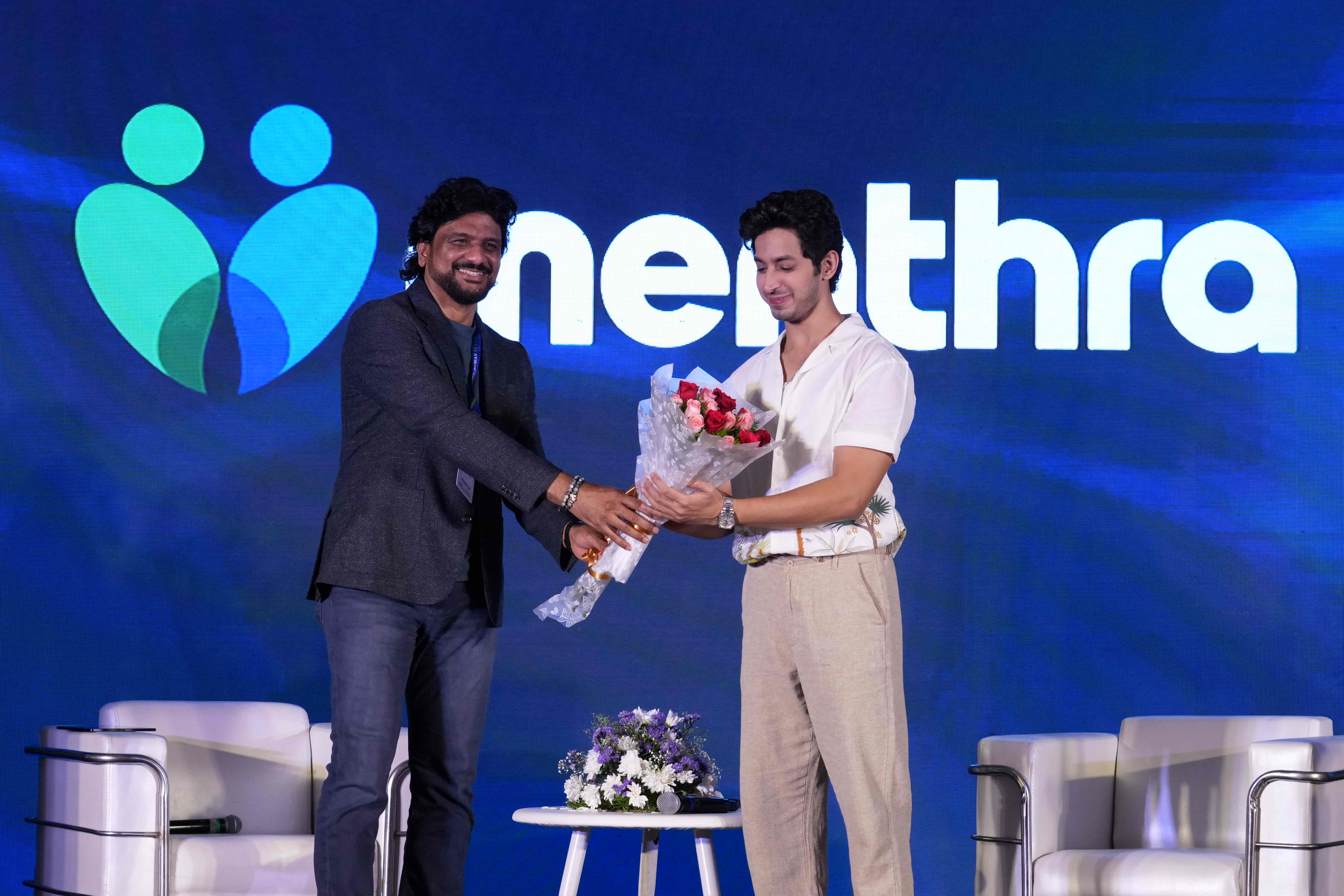
His journey brought the session’s central question into sharper focus: in an AI-driven world, what makes us who we are? Human capability cannot be measured by where someone begins, how quickly they progress or how readily others recognise their potential. It is also shaped by the choices we make, the uncertainty we navigate and our willingness to keep pursuing what matters to us, even when the outcome is unclear.
As machines become increasingly capable, understanding what makes us human requires looking beyond what we can produce or achieve. It means recognising the experiences, convictions and individual journeys that shape who we become. Mihir’s story offered a personal lens through which to consider that distinction, reminding us that the human advantage lies not only in what we are capable of doing, but also in the lives we choose to build.
Turning the conversation towards access
The question of human progress also has a practical dimension: who gets to benefit from it?
Menthra is working to make emotional wellbeing support more accessible, including live sessions with trained counsellors and therapists. The idea is simple: access to support should not depend entirely on a person’s ability to pay for it.
As part of this effort, Menthra has committed to matching every dollar and rupee raised through the Human Advantage fundraiser, up to a total of $25,000. Contributions will go towards funding sessions for people who need support but cannot afford it.
This reflects another dimension of the human advantage: our capacity to recognise when someone needs help and do something about it. Progress is not only about what technology makes possible, but also about how we use our resources to make support more accessible.
Why Human Advantage was more than a one-day gathering
An event can bring people into a room. The more difficult task is to ensure that the questions raised there continue to influence conversations after everyone leaves.
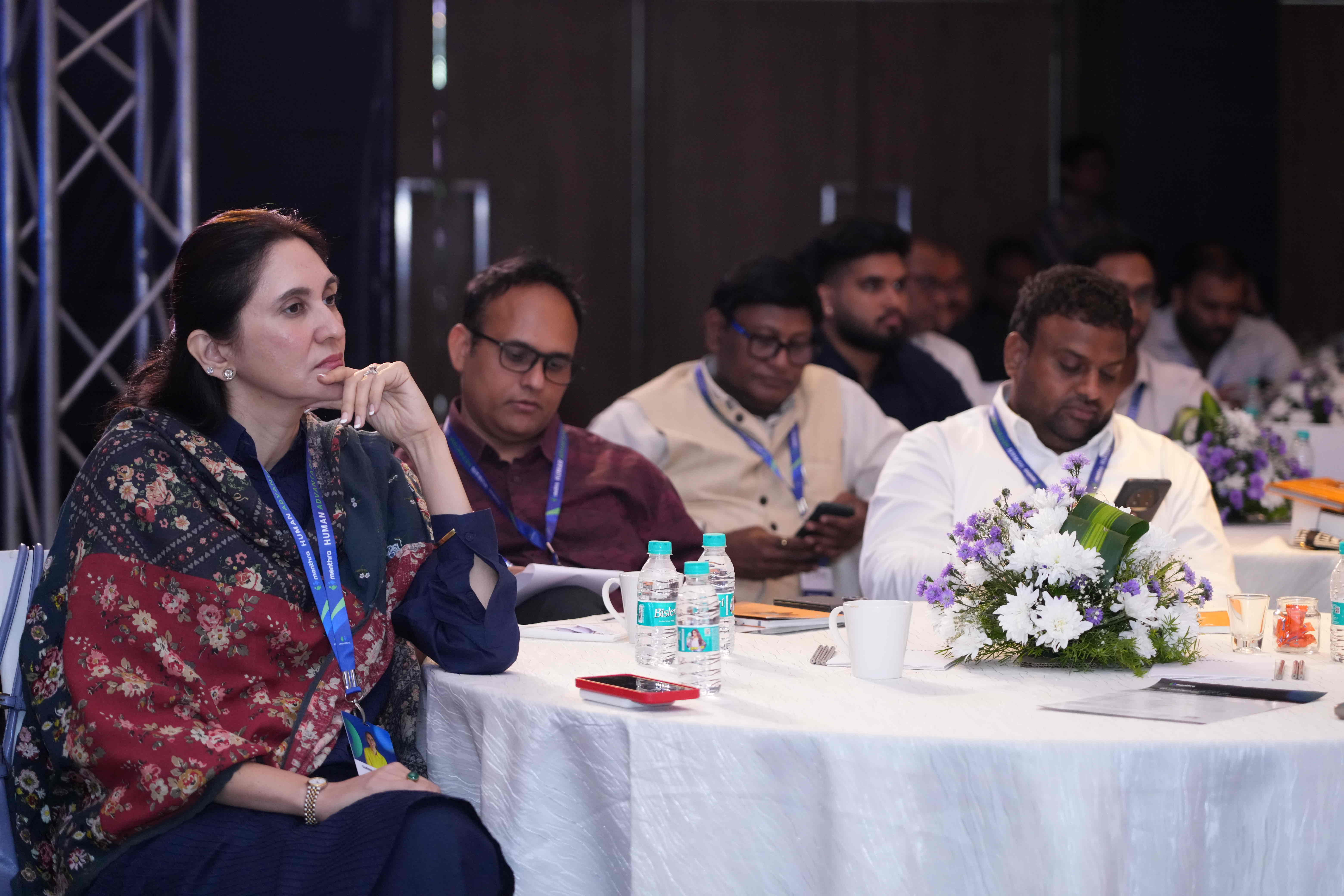
Human Advantage was conceived around an idea larger than a single programme: that the human consequences of technological change deserve sustained, serious attention across industries and institutions.
The conversations at Human Advantage moved between individual ambition and collective responsibility, the possibilities of AI and the limits of human perception, and the demands of leadership and the need for meaningful support. They did not offer one definitive answer to what stays human. Instead, they explored the many ways the question touches our lives and the decisions we make.
For Menthra, the gathering was a contribution to an ongoing conversation about the relationship between technology and humanity. Its significance will ultimately depend not only on the ideas discussed, but on what those ideas encourage people and organisations to reconsider or do differently.
The conversation continues
Human Advantage 2026 began with a question about what becomes more important about being human as AI becomes more capable.
It leaves behind a question that is just as important: what will we choose to become capable of?
AI will continue to expand the boundaries of what is possible. Our responsibility is to think carefully about what those possibilities should serve.
The future is AI. The advantage is human.
And the work of understanding what that means has only just begun.
Media
The event and its central themes were also covered by several media outlets. Find the links below for the full article:
- Deccan Chronicle: AI Can Support Workplace Wellbeing, Say Experts
- Telugu News18: ఏఐ యుగంలో మనిషి విలువ తగ్గుతుందా? హైదరాబాద్లో ‘మెంథ్రా’ ఆసక్తికర చర్చ
- Telangana Today: Menthra hosts ‘Human Advantage’ event to highlight human skills in AI era
- SME Street: As AI Reshapes Work and Wellbeing, Menthra Asks: What Is the Human Advantage?
- Mission Patrika: एआई के दौर में और कीमती होंगी मानवीय भावनाएं
- Business News This Week: As AI Reshapes Work and Wellbeing, Menthra Asks: What Is the Human Advantage?
FAQ
- What is Human Advantage 2026 about?
Human Advantage 2026 was a gathering hosted by Menthra on 10 October 2026 at Avasa Hotel, Hyderabad. It brought together people from across industries to explore human potential, leadership, emotional wellbeing and the evolving relationship between people and AI.
- What was the theme of Human Advantage 2026?
The event explored the theme “Evolving Human Potential in the Age of AI.” It examined how human judgement, creativity, connection and emotional intelligence remain important as artificial intelligence becomes more capable.
- Who attended Human Advantage 2026?
The event brought together leaders and professionals from business, technology, healthcare, education, entrepreneurship and social impact. Speakers included Srikanth Bolla, Deepti Varma, Prof. Ashok Kumar Pandey and other leaders who brought diverse perspectives to the conversation.
- What were the key takeaways from Human Advantage 2026?
A central takeaway was that technological progress and human progress need to advance together. Discussions explored the role of leadership in times of change, the importance of emotional wellbeing, the nature of intelligence, and how innovation can better serve human needs.
- Why is human potential important in the age of AI?
As AI takes on more tasks, distinctly human capabilities such as judgement, empathy, creativity, adaptability and meaningful connection become increasingly important. Developing these capabilities can help individuals and organisations navigate change more thoughtfully.
- What is the Human Advantage fundraiser?
The Human Advantage fundraiser aims to make emotional wellbeing support accessible to people who may not be able to afford it. Menthra has committed to matching every dollar and rupee raised, up to a total of $25,000. Contributions will help fund sessions with trained counsellors and therapists.
- How can I contribute to the fundraiser?
You can contribute through the fundraising page. Your contribution helps make emotional wellbeing sessions more accessible to people who may not otherwise be able to afford them.
- What does “The future is AI. The advantage is human” mean?
It reflects Menthra’s belief that while AI will continue to reshape how we work and live, the human qualities we bring to those changes will remain essential. The challenge is not simply to build more capable technology, but to ensure that progress continues to serve people.